
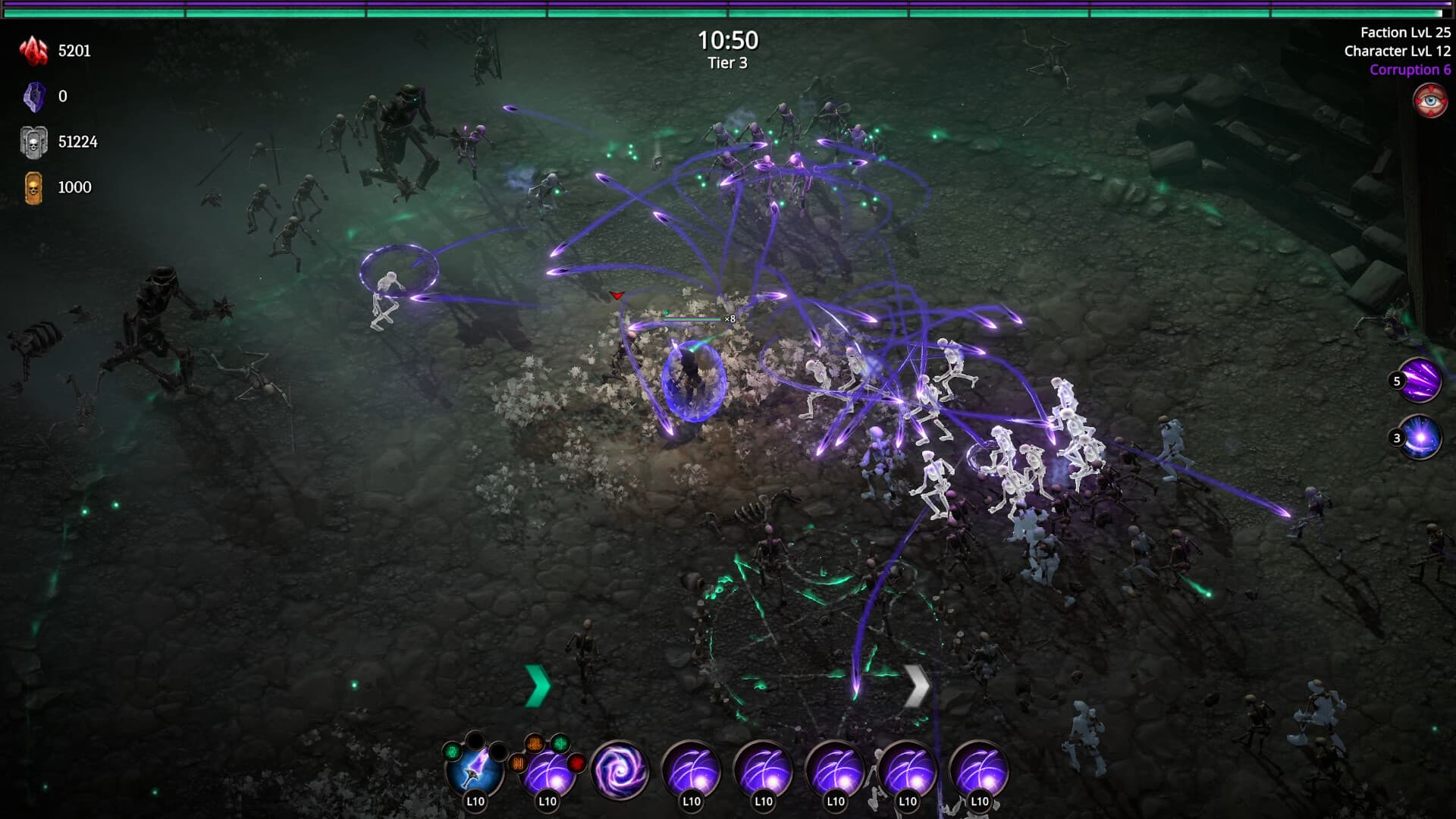
What a Dark Ritual is designed to do
Conquest Dark combines horde combat with the character-development decisions of an action RPG. The previously checked Steam description presents a ritual as a condensed climb in power rather than a long conventional campaign. That explains why weapons, abilities, armor, runes and upgrade choices belong together when discussing a build. It does not establish one fixed duration for every ritual, and a universal run length remains 待确认.
A useful starting point is to distinguish the game's overall loop from one particular strategy. A build video demonstrates one combination under its own conditions; it does not prove that every new player has the same unlocks. Read the ritual description and the configuration before trying to reproduce the result. This is practical preparation, not a developer-certified beginner route.
How the Build Planner changes repeated runs
The 0.20.0 announcement introduces an in-game planner with sections for character properties, abilities, gear and Soul Fragment preferences. Its Share function converts a build into text that another player can import. Auto-Build Mode then tries to follow the selected plan during a ritual. The developer explicitly says it receives the same random choices as manual play, so automation is not a guarantee that every requested option will appear.
Subsequent updates make the patch context important even for basic planner instructions. Version 0.20.6 adds ritual tags and a tooltip showing the version in which a build was created. Version 0.20.7 changes how unavailable requirements are handled and lets players save a character as a build after a run. These are reasons to inspect a shared setup instead of treating its existence as proof of compatibility.
Why an imported build can diverge from the original
In 0.20.7, Auto-Build stops pursuing an armor set, stat or passive ability that the player has not unlocked. Instead, it ignores the unavailable requirement and makes other selections. Changing class or origin also causes related build options to be ignored. Consequently, successful importing and faithful reproduction of the original character are different things.
The 0.21 patch also leaves the Auto-Build hotkey unbound by default to prevent accidental activation. An older guide may tell you to press a key based on the original 0.20 controls. Check the current keybinding screen instead of assuming that the older instruction is still active. The planner is a convenience layer over the character system, not a replacement for reading requirements.
Read equipment rewards before chasing an old location
Unique Armor is no longer hidden as a secret unlock in 0.21. Pieces appear on ritual and faction reward tracks, and the developer also changes some unlock locations. Deathspeaker's Handwraps replaces Deathbringer's Handwraps. These verified changes explain why an older equipment list can be recognizable but still send a player in the wrong direction.
Enhancement has its own restrictions. The 0.20.12 notes prevent already-capped stats from appearing as enhancement options, while 0.21 makes some powerful armor stats non-enhanceable and marks them with locks. A missing enhancement option does not automatically mean your game is broken. Read the tooltip and the relevant patch note before rerolling repeatedly.
Separate runes from Runewords
The 0.21 update adds Abyss runes and the Runeword system. Once unlocked, an ordered sequence of three or five runes in an ability can grant a global bonus. Runeword Discovery expands the set of combinations that can activate. This creates a difference between inserting useful individual runes and reproducing another player's complete Runeword.
The developer describes Runeword effects as deterministic across players and rituals. A copied sequence can nevertheless remain inactive if relevant conditions differ. Exact recipe thresholds and a complete combination database are not present in the supplied evidence. See the runes guide for the verified activation checks rather than assuming every shared combination works immediately.
Understand what changed in the verified major update
Version 0.21 adds Necrolord, allies and companions, the Forlorn race and The First Graves ritual. It also introduces Umbral damage and the Cursed condition. These additions coexist with changes to older abilities and equipment. A guide written before them should be read as historical advice until its dependencies have been checked.
One especially important example is Instant Attack Chance becoming Rapid Attack Chance. The behavior stays unchanged for Primary Attack Abilities, while the stated cooldown reduction for other abilities changes from 95% to 50%. That is a specific compatibility issue, not evidence that every old build is unusable. The build checklist separates these confirmed changes from performance claims requiring a gameplay test.
What this explanation does not establish
The collected material does not provide a complete campaign walkthrough, every unlock condition or a universally optimal class ranking. It also does not prove a final maximum level, a complete boss count or an exact completion time. Those claims remain 待确认 here. Keeping them separate from the documented systems prevents an introductory explanation from turning into an invented wiki.
For a first review of your setup, identify the ability doing the work, check its requirements and then inspect equipment and rune assumptions. Change one dependency at a time if the build behaves differently. Use current in-game descriptions alongside the dated announcements. These are suggested checks, not claims that the author has personally reproduced every possible ritual.